Owls: Complete Deep Guide – Silent Flight, Night Vision, Hunting Intelligence & Survival Science
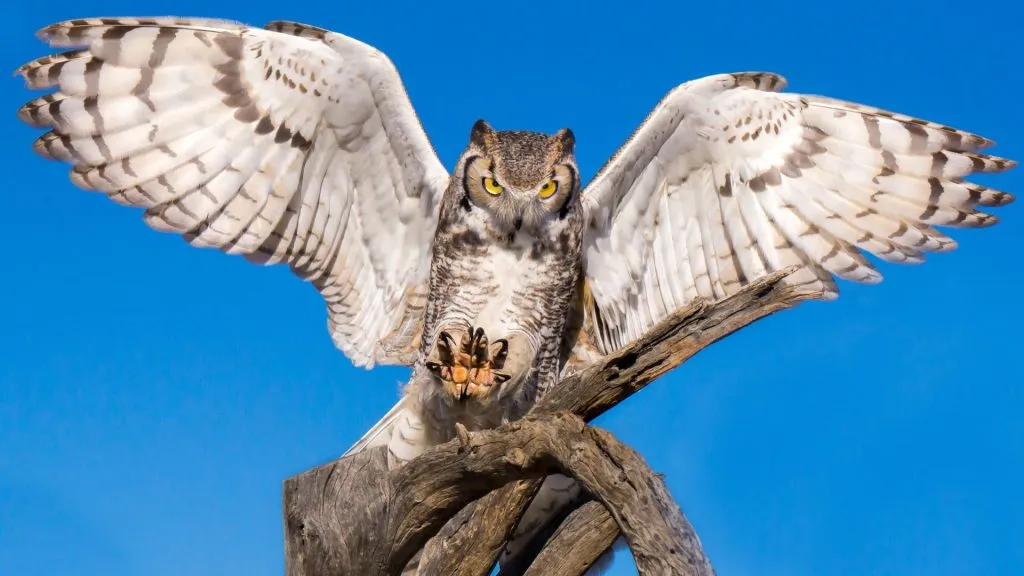
Owls are among the most mysterious and specialized predators in the animal kingdom. Known for their silent flight, enormous eyes, and extraordinary night vision, these birds have fascinated humans for thousands of years. Found across forests, deserts, mountains, grasslands, and even Arctic regions, owls are masters of nocturnal survival and biological adaptation.
Unlike most birds, owls evolved specifically for hunting in darkness. Their bodies are engineered with remarkable precision, allowing them to detect movement, hear hidden prey beneath snow or leaves, and attack with almost complete silence. Scientists consider owls one of nature’s finest examples of evolutionary specialization because nearly every part of their anatomy is optimized for stealth and efficiency.
Beyond their hunting abilities, owls also play critical ecological roles. They regulate rodent populations, maintain ecosystem balance, and serve as indicators of environmental health. Different owl species have adapted to extremely different climates, demonstrating incredible biological flexibility and survival intelligence.
This deep guide explores owl anatomy, silent flight physics, night vision science, communication systems, ecological importance, hunting behavior, reproduction, intelligence, and survival adaptations in extraordinary detail.
Owl Classification and Species Diversity
Owls belong to the order Strigiformes, which contains over 250 known species worldwide. They are divided into two primary families:
True Owls (Strigidae)
This family includes most owl species, such as:
- Barn owls
- Snowy owls
- Eagle owls
- Great horned owls
True owls are known for:
- Rounded facial discs
- Powerful talons
- Excellent camouflage
- Strong night vision
Barn Owls (Tytonidae)
Barn owls differ slightly in appearance with:
- Heart-shaped faces
- Longer legs
- Lighter feather coloration
They possess some of the best hearing abilities in the bird world.
Owls exist on every continent except Antarctica, occupying a massive range of ecological environments.
Physical Characteristics of Owls
Owls possess highly specialized anatomy designed for stealth hunting and nocturnal survival.
Large Eyes and Facial Structure
One of the most recognizable owl features is their enormous eyes. Unlike human eyes, owl eyes are tubular rather than spherical, increasing light collection in darkness.
Because their eyes are fixed in place, owls compensate with incredible neck flexibility.
Neck Rotation
Owls can rotate their heads up to 270 degrees due to:
- Specialized vertebrae
- Flexible blood vessels
- Unique skeletal adaptations
This allows them to scan surroundings without moving their bodies and alerting prey.
Talons and Beaks
Owls possess:
- Razor-sharp talons
- Hooked beaks
- Extremely powerful grip strength
Their feet can apply immense pressure to capture and kill prey instantly.
The Science of Silent Flight
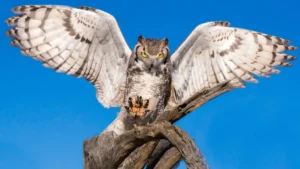
Owls are famous for nearly silent flight, one of the most advanced hunting adaptations in nature.
Specialized Feather Structure
Unlike normal bird feathers, owl wings contain:
- Soft feather edges
- Serrated leading feathers
- Velvet-like surfaces
These structures break up air turbulence and reduce aerodynamic noise.
Noise Reduction Mechanics
Normal bird wings create loud sound waves during flight. Owl feathers absorb and disperse these vibrations, allowing them to approach prey almost undetected.
Scientists study owl feather mechanics to improve:
- Aircraft technology
- Wind turbine efficiency
- Noise-reduction engineering
Owls are considered biological inspirations for modern aerodynamics.
Stealth Hunting Advantage
Silent flight gives owls several advantages:
- Prey cannot hear approach
- Hunting success increases
- Energy waste decreases
- Competition advantages improve
This adaptation makes owls among the deadliest nighttime predators.
Night Vision and Visual Adaptations
Owls are extraordinary nighttime hunters because of highly advanced visual systems.
Massive Light Collection
Owl eyes contain enormous numbers of rod cells, which specialize in low-light vision.
This allows owls to:
- Detect faint movement
- Navigate darkness
- Hunt during moonless nights
Some species can hunt in light levels humans would perceive as complete darkness.
Binocular Vision
Owls possess forward-facing eyes, creating:
- Strong depth perception
- Accurate distance measurement
- Precise attack timing
Their binocular vision resembles predatory mammals more than most birds.
Daylight Limitations
Although owls can see during daytime, many species are sensitive to bright sunlight due to their night-adapted eyes.
This explains why many owls remain hidden during the day.
Hearing Systems and Sound Detection
An owl’s hearing ability is often even more important than vision.
Asymmetrical Ears
Many owl species possess ears positioned unevenly on the skull. This allows:
- Three-dimensional sound mapping
- Precise prey localization
- Accurate depth detection
Owls can determine the exact position of moving prey using sound alone.
Hunting Beneath Snow
Some owls can hear rodents moving under:
- Snow
- Grass
- Leaves
- Soil cover
This extraordinary sensory adaptation enables hunting even when prey is invisible.
Facial Disc Function
The circular feathers around an owl’s face act like a satellite dish, funneling sound toward the ears.
This dramatically improves hearing sensitivity.
Hunting Behavior and Predator Intelligence
Owls are apex aerial predators in many ecosystems.
Hunting Techniques
Owls use several hunting methods:
- Perch-and-pounce attacks
- Low silent gliding
- Midair ambushes
- Ground strikes
Their strategy depends on habitat and prey type.
Diet
Most owls consume:
- Rodents
- Rabbits
- Insects
- Fish
- Frogs
- Small birds
Larger species may hunt mammals nearly their own size.
Precision Attack Mechanics
Owls combine:
- Silent flight
- Night vision
- Acute hearing
- Fast reflexes
This combination produces extremely high hunting efficiency.
Owl Intelligence and Learning Ability
Although parrots and corvids often receive more attention for intelligence, owls possess highly refined hunting cognition.
Spatial Memory
Owls remember:
- Hunting territories
- Nesting sites
- Predator locations
- Migration pathways
Their memory supports long-term survival.
Adaptive Hunting
Owls adjust hunting methods depending on:
- Weather
- Prey activity
- Moonlight conditions
- Habitat structure
This behavioral flexibility increases hunting success.
Learning in Young Owls
Juvenile owls gradually develop:
- Flight control
- Sound targeting
- Prey recognition
- Attack timing
Learning periods are essential before independent survival.
Owl Communication Systems
Owls communicate using vocalizations, body language, and territorial displays.
Vocal Calls
Different owl calls serve different functions:
- Territory defense
- Mate attraction
- Alarm warnings
- Parent-offspring communication
Some species produce deep hoots, while others hiss, screech, or whistle.
Territorial Communication
Owls are highly territorial. Vocal calls help:
- Prevent conflict
- Establish boundaries
- Warn intruders
This reduces dangerous physical confrontations.
Body Language
Owls communicate visually through:
- Feather positioning
- Wing spreading
- Eye narrowing
- Head posture
Aggression, fear, and curiosity can all be displayed physically.
Ecological Importance of Owls
Owls are essential ecosystem stabilizers.
Rodent Population Control
One owl family may consume thousands of rodents annually.
This helps:
- Protect crops
- Reduce disease spread
- Maintain ecological balance
Farmers often benefit enormously from healthy owl populations.
Food Web Balance
Owls influence:
- Predator-prey relationships
- Small mammal populations
- Forest biodiversity
Removing owls from ecosystems can trigger ecological imbalance.
Environmental Indicators
Owls are sensitive to pollution and habitat destruction, making them valuable indicators of ecosystem health.
Declining owl populations often signal environmental problems.
Reproduction and Nesting Behavior
Owls display fascinating reproductive strategies.
Nesting Locations
Owls may nest in:
- Hollow trees
- Cliffs
- Abandoned nests
- Underground burrows
- Buildings
Different species adapt nesting behavior to habitat conditions.
Egg Incubation
Female owls usually incubate eggs while males provide food.
Incubation periods vary by species but require intense parental investment.
Chick Development
Young owls develop slowly and depend heavily on parents for:
- Feeding
- Protection
- Hunting instruction
Many juvenile owls fail survival without sufficient learning time.
Survival Adaptations in Extreme Environments
Owls survive across some of Earth’s harshest climates.
Arctic Adaptations
Snowy owls possess:
- Thick insulation feathers
- White camouflage
- Cold-resistant metabolism
These adaptations support survival in freezing tundra conditions.
Desert Adaptations
Desert owls conserve water and avoid daytime heat using:
- Nocturnal behavior
- Shade sheltering
- Efficient body cooling
Forest Camouflage
Woodland owls blend almost perfectly with tree bark due to specialized feather patterns.
Camouflage protects them from predators and improves hunting stealth.
Threats Facing Owl Populations
Many owl species face increasing environmental threats.
Habitat Loss
Deforestation destroys nesting sites and hunting grounds.
Pesticides and Poisoning
Rodent poisons can kill owls indirectly through contaminated prey.
Vehicle Collisions
Roadside hunting behavior places many owls at risk of traffic accidents.
Climate Change
Changing temperatures alter:
- Migration patterns
- Food availability
- Breeding success
- Habitat distribution
Long-term climate instability threatens many owl populations.
Owls in Human Culture and Mythology
Owls have appeared in myths and folklore for thousands of years.
Symbols of Wisdom
In ancient Greece, owls symbolized wisdom and were associated with Athena, goddess of knowledge.
Symbols of Mystery
Many cultures connected owls with:
- Night
- Spirits
- Death
- Supernatural forces
Their silent behavior and glowing eyes contributed to these beliefs.
Modern Popularity
Today owls remain popular in:
- Literature
- Films
- Scientific research
- Conservation campaigns
Their mysterious appearance continues fascinating humans worldwide.
Conclusion
Owls are among the most specialized and efficient predators ever produced by evolution. Their silent flight, extraordinary hearing, advanced night vision, and stealth hunting abilities represent one of nature’s greatest examples of biological engineering.
These birds are far more than symbols of mystery or wisdom. They are critical ecological regulators that maintain balance in forests, deserts, grasslands, and Arctic ecosystems. Their ability to survive in such varied environments demonstrates remarkable adaptability and evolutionary success.
Scientific research on owls continues inspiring innovations in acoustics, aviation, and sensory biology. As human activity increasingly threatens wildlife habitats, protecting owl populations becomes essential not only for biodiversity but also for maintaining healthy ecosystems.
Owls remain living masterpieces of evolutionary design—silent hunters perfectly adapted for life in darkness.










Post Comment