Ravens: Complete Deep Guide – Intelligence, Communication, Memory & Survival Science
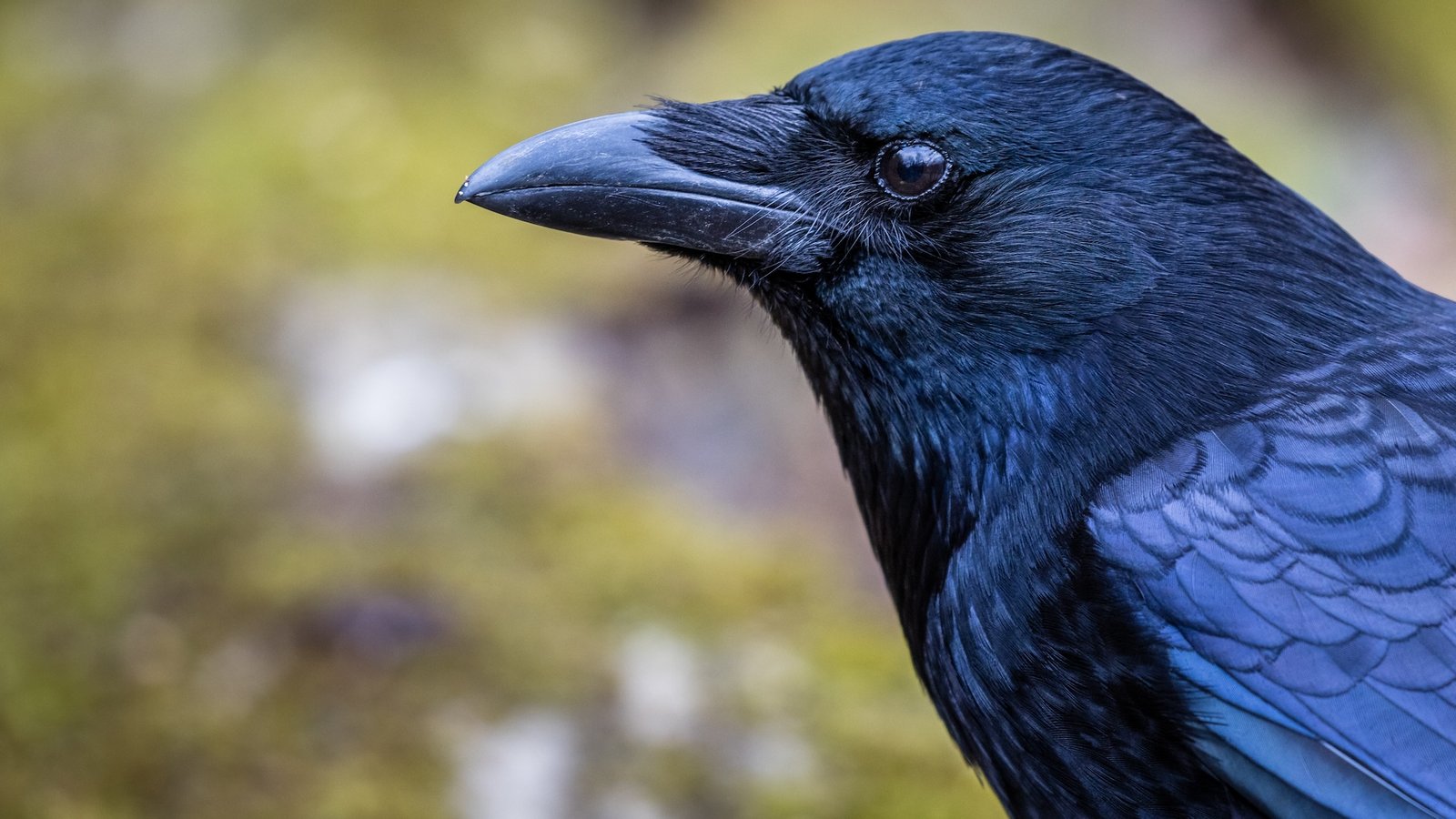
Ravens are among the most intelligent animals on Earth. For centuries, these mysterious black birds have appeared in mythology, religion, literature, and scientific research because of their unusual behavior and extraordinary cognitive abilities. While many people confuse ravens with crows, ravens are larger, more powerful, and often demonstrate even more advanced problem-solving skills. Scientists now study ravens to better understand animal intelligence, communication systems, memory formation, and social behavior.
Ravens belong to the corvid family, a group of birds considered the “primates of the sky” due to their remarkable mental abilities. Their intelligence rivals that of chimpanzees in several experiments, especially in tasks involving planning, tool use, and strategic thinking. These birds are capable of recognizing human faces, solving puzzles, remembering hidden food locations for years, and even manipulating other animals for personal gain.
Beyond intelligence, ravens play an important ecological role. They help clean ecosystems by consuming carrion, control insect populations, and influence predator-prey relationships in forests, mountains, deserts, and Arctic environments. Their survival strategies are among the most adaptable in the animal kingdom, allowing them to thrive in some of the harshest climates on Earth.
This deep guide explores the biology, intelligence, communication systems, ecological importance, memory science, social structure, and survival mechanisms of ravens in extraordinary detail.
Raven Classification and Physical Characteristics
Ravens belong to the genus Corvus, with the common raven scientifically named Corvus corax. They are among the largest perching birds in the world and can be found across North America, Europe, Asia, and parts of North Africa.
Size and Appearance
Adult ravens typically measure:
- 22–27 inches in length
- Wingspan of up to 4 feet
- Weight between 1.5–4 pounds
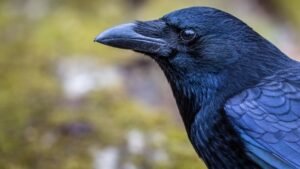
Their glossy black feathers often display blue or purple iridescence under sunlight. Ravens possess:
- Thick curved beaks
- Shaggy throat feathers
- Powerful wings
- Sharp eyesight
- Exceptional vocal organs
Unlike crows, ravens have wedge-shaped tails and deeper, more resonant calls.
Their physical design supports survival in difficult conditions. Their feathers provide insulation in freezing climates, while their strong beaks allow them to tear tough meat and crack open food sources.
The Intelligence of Ravens
Ravens are widely recognized as one of the smartest bird species ever studied. Their brains are highly developed relative to body size, especially in regions associated with learning and decision-making.
Problem-Solving Skills
Scientific experiments show ravens can:
- Solve multi-step puzzles
- Use tools
- Plan future actions
- Understand cause and effect
- Learn from observation
In laboratory tests, ravens have successfully pulled strings to retrieve food, opened complex containers, and manipulated objects to achieve goals. Some experiments demonstrate that ravens can think several steps ahead before acting.
Their intelligence resembles the cognitive abilities of great apes in certain situations.
Tool Use
Ravens occasionally use sticks, rocks, and other objects as tools. In the wild, they may use branches to access hidden food or manipulate difficult surfaces.
Tool use in birds is extremely important because it indicates advanced reasoning abilities rather than simple instinctive behavior.
Strategic Thinking
Ravens can deceive competitors by pretending to hide food in one location while secretly storing it elsewhere. This behavior suggests:
- Awareness of observation
- Understanding of theft risks
- Ability to anticipate another animal’s actions
This level of social intelligence is extremely rare in non-human species.
Memory and Brain Science
One of the most remarkable aspects of raven biology is memory.
Long-Term Memory
Ravens can remember:
- Human faces
- Dangerous locations
- Food storage sites
- Social interactions
- Predator encounters
Research indicates ravens may remember negative human interactions for years. If threatened by a specific person, they can recognize that individual later and respond aggressively or cautiously.
Spatial Memory
Ravens hide food in hundreds of separate locations known as caches. During winter, these hidden reserves become essential for survival.
To recover food successfully, ravens depend on:
- Landmark recognition
- Spatial awareness
- Seasonal memory
- Environmental mapping
Their brains process geographic information with extraordinary precision.
Brain Structure
Although bird brains differ structurally from mammalian brains, ravens possess densely packed neurons associated with high-level cognition. Their neural efficiency allows advanced thinking despite relatively small brain size.
Scientists increasingly believe intelligence evolved independently in birds and mammals through different biological pathways.
Raven Communication Systems
Ravens possess one of the most advanced communication systems in the avian world.
Vocal Communication
Ravens produce:
- Deep croaks
- Clicking sounds
- Knocking noises
- Mimicked sounds
- Alarm calls
Their vocal range serves many purposes:
- Territory defense
- Warning signals
- Social bonding
- Mating communication
- Group coordination
Some ravens can mimic human speech similarly to parrots.
Body Language
Ravens also communicate through:
- Wing movements
- Feather positioning
- Posture changes
- Flight displays
Dominance, fear, curiosity, and aggression can all be expressed visually.
Social Intelligence in Communication
Ravens adapt communication depending on the audience. They may use different calls around predators compared to family members or rivals.
This suggests contextual awareness, an important marker of advanced cognition.
Social Structure and Relationships
Ravens are highly social animals, although their social systems vary throughout life stages.
Family Bonds
Young ravens often remain with parents for extended periods, learning:
- Food gathering techniques
- Predator avoidance
- Social hierarchy rules
- Environmental navigation
These learning periods are critical for survival.
Pair Bonding
Adult ravens usually form long-term monogamous partnerships. Mated pairs cooperate in:
- Nest building
- Territory defense
- Raising chicks
- Food sharing
Their cooperation strengthens reproductive success.
Social Hierarchies
In larger groups, ravens establish dominance structures. More powerful individuals gain:
- Better feeding opportunities
- Safer nesting areas
- Higher mating success
Social competition among ravens can become highly strategic and intelligent.
Feeding Behavior and Hunting Strategies
Ravens are omnivorous opportunists capable of surviving on diverse food sources.
Diet
Raven diets may include:
- Small mammals
- Insects
- Eggs
- Fruits
- Seeds
- Carrion
- Fish
- Human food waste
Their flexible diet is a major reason for their global success.
Scavenging Expertise
Ravens are famous scavengers. They often locate dead animals before many predators due to:
- Sharp eyesight
- Excellent memory
- High mobility
In cold ecosystems, scavenging is especially important because food can become scarce.
Cooperative Feeding
In some cases, ravens cooperate to access food sources too difficult for one bird alone. They may also follow wolves or large predators to feed on leftovers from kills.
This ecological relationship benefits both scavengers and ecosystems.
Raven Ecology and Environmental Importance
Ravens contribute significantly to ecological stability.
Cleaning the Environment
By consuming carrion, ravens help:
- Reduce disease spread
- Recycle nutrients
- Clean decaying organic matter
Scavengers play an essential role in ecosystem health.
Seed Distribution
Ravens accidentally spread seeds through feeding and caching behaviors. This supports plant growth and forest regeneration.
Predator Interactions
Ravens influence predator dynamics by:
- Warning animals about danger
- Competing for food
- Leading predators toward prey
- Feeding on remains after hunts
Their ecological influence extends across multiple species.
Survival Adaptations
Ravens survive in environments ranging from deserts to Arctic tundra.
Cold Climate Adaptations
In freezing regions, ravens rely on:
- Dense insulating feathers
- High intelligence
- Food caching behavior
- Efficient flight patterns
These adaptations allow survival in extreme winter conditions.
Urban Adaptability
Ravens increasingly thrive near humans due to:
- Flexible diets
- Rapid learning
- Fear reduction
- Problem-solving abilities
Urban environments provide both opportunities and dangers.
Predator Avoidance
Despite their intelligence, ravens face threats from:
- Hawks
- Eagles
- Owls
- Mammalian predators
- Humans
They avoid danger using group alarms, aerial agility, and strategic awareness.
Reproduction and Nesting
Raven nesting behavior demonstrates strong parental investment.
Nest Construction
Ravens build large nests from:
- Sticks
- Grass
- Fur
- Mud
- Soft plant materials
Nests are usually placed on:
- Cliffs
- Tall trees
- Towers
- Remote rocky structures
Raising Chicks
Both parents care for offspring by:
- Feeding chicks
- Defending nests
- Teaching survival skills
Young ravens develop slowly, requiring extensive learning before independence.
Ravens in Human Culture and Mythology
Throughout history, ravens symbolized:
- Wisdom
- Death
- Mystery
- Prophecy
- Transformation
Norse Mythology
In Norse mythology, the god Odin had two ravens:
- Huginn (“thought”)
- Muninn (“memory”)
These birds traveled the world gathering knowledge.
Indigenous Traditions
Many Indigenous cultures viewed ravens as creators, tricksters, or spiritual messengers.
Modern Symbolism
Today ravens continue appearing in:
- Literature
- Horror stories
- Films
- Scientific documentaries
Their intelligence and dark appearance contribute to their powerful cultural image.
Threats to Raven Populations
Although ravens remain widespread, certain threats affect regional populations.
Habitat Destruction
Deforestation and industrial expansion reduce nesting areas.
Poisoning
Secondary poisoning from pesticides or contaminated carcasses can kill ravens.
Human Conflict
Farmers sometimes view ravens as pests due to crop feeding or egg predation.
Climate Change
Changing climates may alter:
- Food availability
- Migration patterns
- Breeding success
- Ecosystem balance
Long-term environmental disruption could affect raven populations globally.
Conclusion
Ravens are among the most extraordinary birds ever studied. Their intelligence, memory, communication systems, and ecological adaptability place them at the highest levels of animal cognition outside humans and great apes. These birds demonstrate planning, deception, social strategy, and problem-solving abilities once believed unique to mammals.
Beyond intelligence, ravens serve critical ecological functions as scavengers, seed dispersers, and environmental stabilizers. Their ability to survive in forests, deserts, mountains, Arctic tundra, and urban environments reveals the incredible flexibility of their biology.
Scientific research continues uncovering new details about raven cognition and behavior, challenging traditional ideas about the limits of animal intelligence. As ecosystems face increasing pressure from climate change and human expansion, understanding species like ravens becomes more important than ever.
Ravens are not merely birds of myth or mystery—they are living examples of evolution’s remarkable capacity to produce intelligence, resilience, and ecological balance in the natural world.






Post Comment