Penguins: Complete Deep Guide – Antarctic Survival, Social Behavior, Swimming Physics & Evolution Science
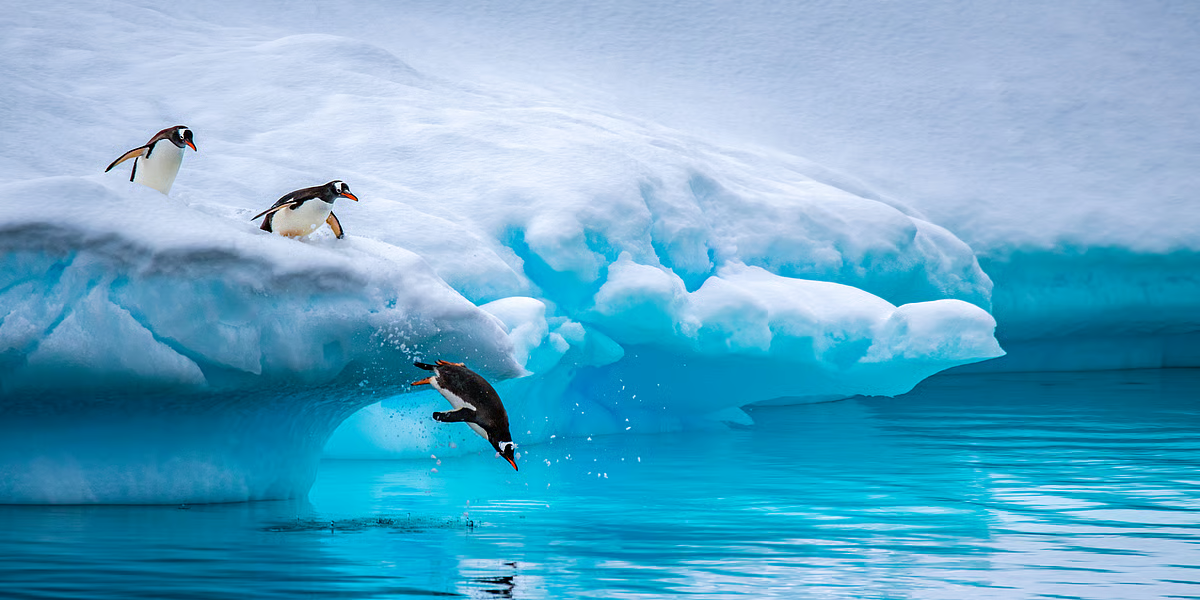
Penguins are among the most specialized and fascinating birds on Earth. Unlike most birds, penguins sacrificed flight millions of years ago in exchange for becoming some of the most efficient swimmers in the animal kingdom. Their bodies evolved into streamlined aquatic machines capable of surviving brutal Antarctic temperatures, powerful ocean currents, and long hunting journeys across freezing seas.
These remarkable birds are far more complex than their popular image suggests. Penguins possess advanced social systems, sophisticated communication methods, exceptional parental care, and biological adaptations that allow survival in some of the harshest environments ever inhabited by vertebrates.
Scientists study penguins to better understand climate change, marine ecosystems, evolutionary adaptation, thermoregulation, and animal cooperation. Because penguins depend heavily on stable ocean conditions, their populations also serve as important indicators of environmental health.
This deep guide explores penguin evolution, anatomy, swimming mechanics, social behavior, communication systems, reproduction, ecological importance, intelligence, and survival science in extraordinary detail.
Penguin Classification and Species Diversity
Penguins belong to the family Spheniscidae, which contains approximately 18 living species distributed mainly across the Southern Hemisphere.
Major Penguin Species
Some of the most well-known species include:
- Emperor penguins
- King penguins
- Adelie penguins
- Gentoo penguins
- Chinstrap penguins
- African penguins
- Little blue penguins
Each species evolved unique adaptations depending on climate, habitat, and food availability.
Geographic Distribution
Although strongly associated with Antarctica, penguins also live in:
- South Africa
- South America
- New Zealand
- Australia
- Subantarctic islands
Some species inhabit surprisingly warm environments near the equator.
Penguin Evolution and the Loss of Flight
Penguins evolved from flying seabirds approximately 60 million years ago.
Why Penguins Stopped Flying
Over time, natural selection favored:
- Strong swimming ability
- Deep diving efficiency
- Underwater speed
- Ocean hunting specialization
Flight became less important than aquatic survival.
Their wings gradually transformed into rigid flippers optimized for underwater propulsion rather than air travel.
Evolutionary Advantages
By abandoning flight, penguins gained:
- Greater diving power
- Improved swimming control
- Better underwater hunting efficiency
- Increased energy conservation in water
This evolutionary trade-off turned penguins into elite marine predators.
Physical Characteristics and Body Structure
Penguins possess highly specialized anatomy designed for aquatic survival.
Streamlined Body Shape
Penguin bodies are torpedo-shaped to reduce water resistance.
This hydrodynamic design allows:
- Faster swimming
- Energy-efficient movement
- Improved maneuverability
Their smooth feather structure further reduces drag underwater.
Flippers Instead of Wings
Unlike flying birds, penguin flippers are:
- Short
- Rigid
- Flattened
- Extremely muscular
These flippers function like underwater wings, generating propulsion through powerful strokes.
Dense Bones
Most birds possess hollow bones for flight efficiency. Penguins evolved dense solid bones that:
- Reduce buoyancy
- Improve diving control
- Increase underwater stability
This adaptation is critical for deep ocean hunting.
Swimming Physics and Diving Mechanics
Penguins are among the fastest and most efficient swimming birds ever evolved.
Swimming Speed
Some penguin species can swim:
- Over 20 miles per hour
- Hundreds of miles during feeding trips
Their streamlined shape minimizes turbulence while maximizing propulsion.
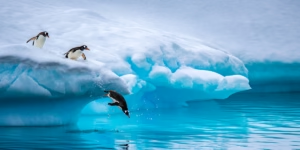
Underwater “Flying”
Penguins essentially “fly” underwater using flipper motion similar to bird flight mechanics in air.
This movement provides:
- Precise steering
- Rapid acceleration
- Efficient long-distance travel
Deep Diving Ability
Emperor penguins can dive:
- Over 1,800 feet deep
- For more than 20 minutes
To survive these dives, penguins evolved:
- Oxygen-efficient blood systems
- Slowed heart rates
- Specialized muscle oxygen storage
These biological adaptations allow survival under extreme underwater pressure.
Thermoregulation and Cold Survival Science
Penguins survive some of the coldest temperatures on Earth.
Feather Insulation
Penguins possess:
- Dense waterproof feathers
- Thick insulating layers
- Air-trapping feather structures
Their feathers form highly effective thermal barriers against icy water.
Blubber Layers
Beneath the skin, penguins store thick fat layers that:
- Preserve body heat
- Provide energy reserves
- Improve buoyancy control
Countercurrent Heat Exchange
Penguins minimize heat loss through specialized blood vessel systems that recycle body heat.
Warm blood transfers heat to cooler returning blood before reaching extremities.
This adaptation prevents dangerous energy loss in freezing environments.
Social Behavior and Colony Life
Penguins are highly social animals that often live in enormous colonies.
Colony Structure
Some penguin colonies contain:
- Thousands
- Tens of thousands
- Even millions of individuals
Large colonies improve:
- Predator detection
- Reproductive success
- Heat conservation
Social Recognition
Despite crowded colonies, penguins can identify:
- Mates
- Chicks
- Neighbors
This recognition depends heavily on vocal communication and visual cues.
Group Cooperation
Penguins frequently cooperate for:
- Protection
- Chick defense
- Warmth conservation
Social living significantly increases survival rates in harsh climates.
Penguin Communication Systems
Penguins possess surprisingly advanced communication methods.
Vocal Identification
Each penguin produces unique vocal calls functioning like individual signatures.
Parents and chicks recognize each other through these calls even in massive noisy colonies.
Body Language
Penguins communicate visually through:
- Head movements
- Flipper gestures
- Posture displays
- Bowing rituals
These behaviors help maintain social bonds and reduce aggression.
Mating Displays
During breeding season, penguins perform elaborate courtship behaviors involving:
- Vocal performances
- Pebble gifting
- Coordinated movements
These displays strengthen pair bonding.
Hunting Behavior and Diet
Penguins are skilled marine hunters.
Main Food Sources
Penguin diets commonly include:
- Fish
- Squid
- Krill
- Crustaceans
Different species specialize in different prey depending on habitat.
Cooperative Hunting
Some penguins hunt in groups to:
- Trap schools of fish
- Increase hunting efficiency
- Reduce energy expenditure
Group coordination improves food acquisition success.
Visual Hunting Adaptations
Penguins possess underwater-adapted vision capable of:
- Detecting prey in low light
- Tracking fast-moving targets
- Seeing clearly underwater
Their eyesight changes focus efficiently between air and water environments.
Reproduction and Parenting Behavior
Penguins demonstrate some of the strongest parental investment in the bird world.
Monogamous Pairing
Many penguin species form seasonal or long-term monogamous pairs.
Partners cooperate in:
- Nest building
- Egg incubation
- Chick feeding
- Predator defense
Emperor Penguin Parenting
Emperor penguins possess one of nature’s most extraordinary reproductive systems.
Males incubate eggs on their feet for:
- Around two months
- During Antarctic winter
- Without feeding
They survive by relying entirely on stored body fat.
Chick Protection
Penguin chicks require:
- Constant warmth
- Frequent feeding
- Group protection
Parents often travel long distances through dangerous oceans to gather food.
Intelligence and Learning Ability
Penguins possess important cognitive adaptations for survival.
Spatial Navigation
Penguins navigate:
- Vast oceans
- Complex ice landscapes
- Long migration routes
Scientists believe they use:
- Solar positioning
- Magnetic field detection
- Ocean current memory
Social Learning
Young penguins learn survival skills through:
- Observation
- Repeated practice
- Group interaction
Social learning improves hunting and colony integration.
Adaptive Behavior
Penguins alter behavior depending on:
- Predator presence
- Weather conditions
- Food availability
- Ice movement
Behavioral flexibility is critical for survival in unstable climates.
Ecological Importance of Penguins
Penguins are essential components of marine ecosystems.
Ocean Food Web Balance
Penguins help regulate populations of:
- Krill
- Fish
- Squid
They also serve as prey for:
- Leopard seals
- Orcas
- Large seabirds
Nutrient Cycling
Penguin colonies contribute nutrients to surrounding ecosystems through waste deposits that enrich soil and support plant growth.
Climate Indicators
Penguins are highly sensitive to ocean temperature changes and sea ice conditions.
Declining penguin populations often indicate:
- Climate disruption
- Overfishing
- Ocean pollution
Scientists closely monitor penguins to study environmental change.
Predators and Survival Threats
Despite their adaptations, penguins face many dangers.
Natural Predators
Penguins are hunted by:
- Leopard seals
- Killer whales
- Skuas
- Giant petrels
Young chicks are especially vulnerable.
Climate Change
Melting sea ice threatens:
- Breeding grounds
- Hunting areas
- Food chains
Some penguin populations are already declining rapidly due to warming oceans.
Overfishing
Commercial fishing reduces prey availability, forcing penguins to travel farther for food.
This increases:
- Energy expenditure
- Chick starvation risks
- Population stress
Pollution
Oil spills and plastic pollution severely damage penguin habitats and feather waterproofing.
Penguins in Human Culture and Science
Penguins became global symbols of:
- Endurance
- Family cooperation
- Climate awareness
Scientific Importance
Researchers study penguins to understand:
- Marine biology
- Evolutionary adaptation
- Climate science
- Animal communication
Popular Media
Penguins frequently appear in:
- Nature documentaries
- Animated films
- Educational programs
Their upright posture and social behavior make them especially relatable to humans.
Survival Strategies in Extreme Conditions
Penguins survive environments many animals could never tolerate.
Huddling Behavior
During Antarctic storms, emperor penguins form tightly packed huddles that:
- Reduce heat loss
- Protect weaker members
- Conserve energy
This collective survival strategy is one of nature’s greatest examples of social thermoregulation.
Energy Conservation
Penguins carefully balance:
- Hunting effort
- Heat preservation
- Fat storage
- Breeding investment
Efficient energy management is essential in cold ecosystems.
Conclusion
Penguins are among the most extraordinary evolutionary specialists in the animal kingdom. Their transformation from flying birds into elite marine swimmers demonstrates the incredible adaptability of life through natural selection.
With streamlined bodies, advanced diving physiology, complex social systems, and exceptional cold-weather survival adaptations, penguins thrive in environments that would be fatal to most species. Beyond their biological uniqueness, they play critical ecological roles in maintaining marine food web balance and monitoring environmental health.
As climate change, pollution, and overfishing increasingly threaten ocean ecosystems, penguins face growing survival challenges. Protecting these remarkable birds is not only important for biodiversity but also for understanding the future stability of Earth’s marine environments.
Penguins remain powerful symbols of resilience, cooperation, and evolutionary brilliance—living examples of how life adapts to even the harshest conditions on the planet.




Post Comment