Chameleons: Complete Deep Guide – Color Change Science, Vision Adaptation, Hunting Mechanics & Survival Biology
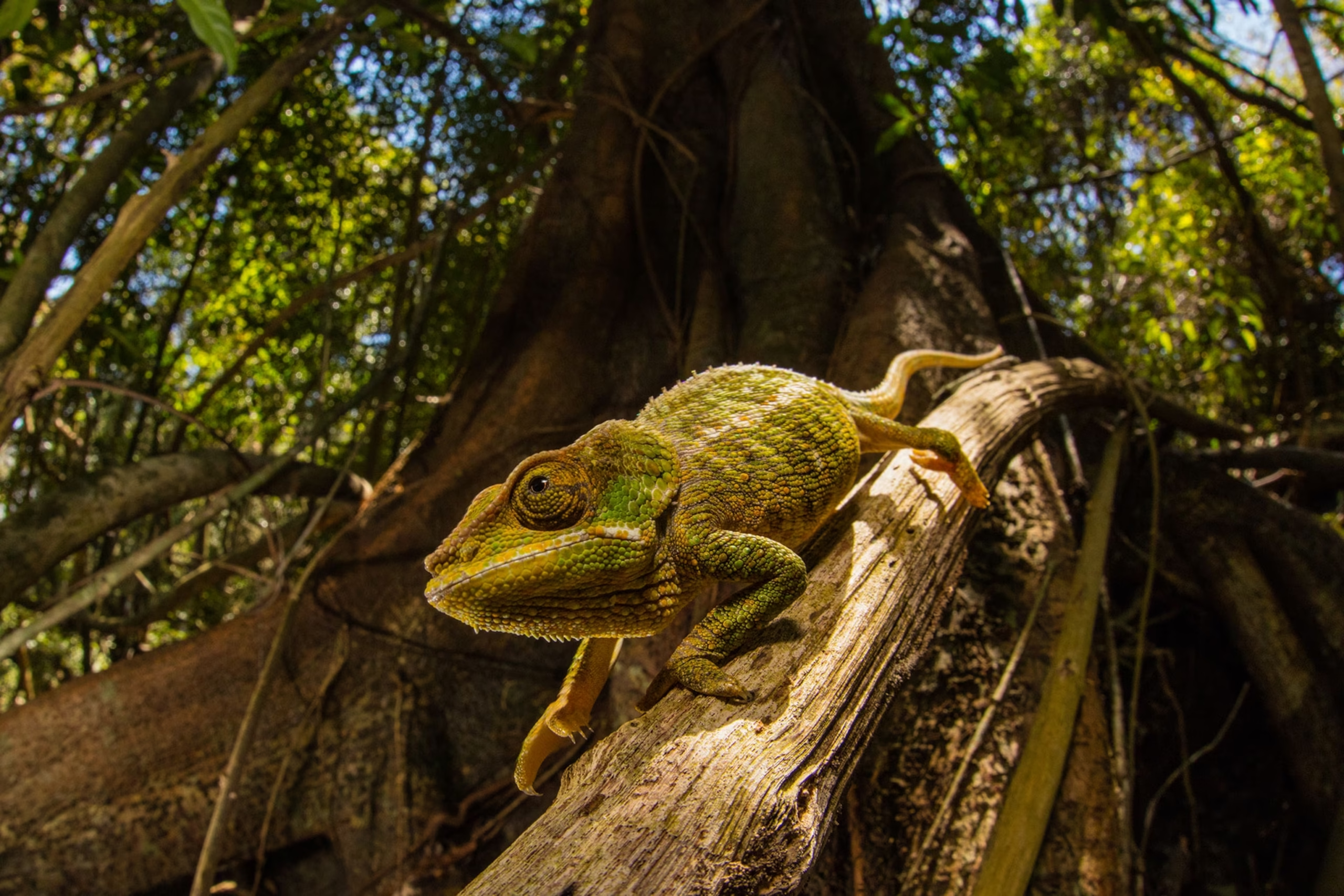
Chameleons are among the most extraordinary reptiles on Earth. Known for their remarkable color-changing abilities, independently moving eyes, and lightning-fast tongues, these reptiles represent one of nature’s most specialized evolutionary designs. Found mainly in Africa, Madagascar, parts of Asia, and southern Europe, chameleons evolved unique biological systems that allow survival in forests, deserts, mountains, and tropical ecosystems.
Although many people believe chameleons change color only for camouflage, modern science reveals a far more complex reality. Their color transformation is connected to communication, emotional state, temperature regulation, and environmental interaction. Combined with advanced vision systems and precision hunting mechanics, chameleons are among the most biologically fascinating reptiles ever studied.
Scientists examine chameleons to better understand optics, biomechanics, skin nanostructures, evolutionary adaptation, and reptilian nervous systems. Their unique anatomy continues inspiring research in material science, robotics, camouflage technology, and optical engineering.
This deep guide explores chameleon evolution, anatomy, color-changing mechanisms, vision systems, hunting behavior, communication methods, ecological importance, reproduction, survival adaptations, and environmental challenges in extraordinary detail.
Chameleon Classification and Species Diversity
Chameleons belong to the family Chamaeleonidae, containing over 200 known species.
Geographic Distribution
Most chameleons inhabit:
- Madagascar
- Mainland Africa
- Tropical forests
- Dry savannas
- Mountain ecosystems
Madagascar alone contains a massive percentage of global chameleon diversity.
Species Variety
Chameleon species range from:
- Tiny leaf chameleons smaller than a finger
to - Large Parsons chameleons over two feet long
Each species evolved unique adaptations suited to its habitat.
Evolution and Specialized Adaptation
Chameleons evolved highly specialized survival systems over millions of years.
Arboreal Evolution
Most chameleons adapted primarily for tree-dwelling life.
Their evolution favored:
- Climbing efficiency
- Precision vision
- Stealth hunting
- Environmental camouflage
Slow Movement Strategy
Unlike fast reptiles, chameleons evolved slow swaying movement patterns that imitate leaves and branches.
This reduces predator detection.
Evolutionary Uniqueness
Many chameleon traits are rare or completely unique among reptiles, including:
- Independent eye movement
- Ballistic tongue projection
- Nanocrystal-based color change
Physical Characteristics and Body Structure
Chameleons possess highly unusual anatomy optimized for arboreal survival.
Body Shape
Most chameleons have:
- Compressed bodies
- Long tails
- Flexible limbs
- Specialized feet
These features improve climbing stability.
Zygodactyl Feet
Their feet are divided into opposing groups of toes functioning like natural gripping tools.
This adaptation allows:
- Strong branch grip
- Precise movement
- Tree stability
Prehensile Tail
Many chameleons use their tails as:
- Balance supports
- Climbing anchors
- Additional gripping tools
The tail acts almost like a fifth limb.
Color Change Science and Skin Nanotechnology
Color-changing ability is one of the most advanced biological systems in reptiles.
How Color Change Works
Contrary to popular belief, chameleons do not simply inject pigment into their skin.
Instead, specialized skin cells called iridophores contain microscopic nanocrystals that reflect light differently when rearranged.
Purpose of Color Change
Chameleons change color for:
- Communication
- Temperature regulation
- Emotional signaling
- Mating displays
- Threat response
Camouflage is only one part of the process.
Emotional and Social Signals
Bright colors may indicate:
- Aggression
- Excitement
- Dominance
- Reproductive readiness
Dark colors may signal:
- Stress
- Fear
- Submission
Scientific Importance
Researchers study chameleon skin structures for:
- Adaptive camouflage technology
- Optical materials
- Nanotechnology engineering
Vision Systems and Eye Adaptation
Chameleons possess some of the most extraordinary eyes in the animal kingdom.
Independent Eye Movement
Each eye can move separately, allowing:
- Simultaneous environmental scanning
- Predator detection
- Prey tracking
A chameleon can observe two different directions at once.
Full Visual Coverage
Their vision provides nearly:
- 360-degree awareness
This minimizes blind spots and improves survival.
Depth Perception
When targeting prey, both eyes focus forward to create precise depth perception for tongue projection.
Ultraviolet Vision
Some species may detect ultraviolet light, improving:
- Communication
- Environmental awareness
- Mate recognition
Tongue Mechanics and Hunting Precision
Chameleons possess one of the fastest feeding systems in the animal kingdom.
Ballistic Tongue Projection
Their tongues can launch:
- Faster than many sports cars accelerate
- Up to twice their body length
The movement occurs in fractions of a second.
Tongue Structure
The tongue contains:
- Elastic collagen tissues
- Powerful accelerator muscles
- Sticky muscular tips
This system stores and releases energy like a biological spring.
Hunting Strategy
Chameleons rely on:
- Patience
- Stealth
- Precision timing
They remain motionless before striking insects with incredible accuracy.
Diet and Feeding Behavior
Most chameleons are insectivores.
Main Food Sources
Typical prey includes:
- Crickets
- Grasshoppers
- Beetles
- Flies
- Spiders
Larger species may occasionally consume:
- Small birds
- Tiny reptiles
Hunting Efficiency
Slow movement combined with camouflage allows chameleons to approach prey undetected.
Their energy-efficient strategy reduces unnecessary movement.
Intelligence and Environmental Awareness
Although reptiles are often underestimated cognitively, chameleons display notable environmental sensitivity.
Spatial Awareness
Chameleons carefully navigate:
- Branch networks
- Elevation changes
- Hunting positions
Precision movement is essential to avoid falls and predators.
Adaptive Behavior
They modify behavior based on:
- Temperature
- Predator presence
- Light levels
- Social interaction
Threat Recognition
Chameleons respond differently depending on the type and proximity of danger.
Responses may include:
- Color change
- Freezing behavior
- Puffing body size
- Escape climbing
Communication Systems and Social Behavior
Chameleons are mostly solitary animals but still possess communication systems.
Visual Communication
Color patterns communicate:
- Territory ownership
- Aggression
- Courtship signals
Visual signaling is more important than vocal communication.
Body Posture Displays
Chameleons communicate through:
- Body inflation
- Head movement
- Open-mouth displays
These signals help avoid physical conflict.
Territorial Behavior
Many species defend territories aggressively, especially males during breeding season.
Reproduction and Development
Chameleon reproduction varies between species.
Egg-Laying Species
Most chameleons lay eggs underground or in hidden locations.
Eggs may incubate for:
- Several months
- Sometimes over a year
Live-Bearing Species
Some mountain chameleons give birth to live young rather than laying eggs.
This adaptation helps survival in colder climates.
Juvenile Development
Young chameleons are usually independent immediately after birth or hatching.
Rapid growth is essential for survival.
Survival Adaptations and Camouflage
Chameleons evolved numerous survival mechanisms.
Camouflage
Their coloration and slow movement help them blend into:
- Leaves
- Branches
- Vegetation shadows
Arboreal Safety
Tree-dwelling behavior reduces exposure to ground predators.
Heat Regulation
Color change also assists thermoregulation:
- Dark colors absorb heat
- Light colors reflect sunlight
This helps maintain body temperature efficiently.
Ecological Importance of Chameleons
Chameleons contribute significantly to ecosystem balance.
Insect Population Control
By consuming insects, chameleons help regulate:
- Pest populations
- Ecological balance
Food Web Role
Chameleons also serve as prey for:
- Birds
- Snakes
- Mammals
They are important components of forest food chains.
Biodiversity Indicators
Healthy chameleon populations often indicate:
- Stable habitats
- Balanced ecosystems
- Low pollution levels
Predators and Environmental Threats
Despite their adaptations, chameleons face many dangers.
Natural Predators
Predators include:
- Birds
- Larger reptiles
- Mammals
Juveniles are especially vulnerable.
Habitat Destruction
Deforestation threatens:
- Breeding zones
- Food sources
- Climbing habitats
Illegal Pet Trade
Rare species are heavily targeted for exotic animal markets.
Climate Change
Temperature and humidity changes affect:
- Reproduction
- Egg survival
- Habitat suitability
Many species are highly sensitive to environmental disruption.
Chameleons in Human Culture and Science
Chameleons have fascinated humans for centuries.
Symbolism
They often symbolize:
- Adaptation
- Transformation
- Change
Scientific Inspiration
Their biology inspires research in:
- Robotics
- Material science
- Optical engineering
- Camouflage technology
Popular Interest
Chameleons remain popular in:
- Wildlife documentaries
- Educational programs
- Reptile research
Their unusual appearance continues attracting scientific attention.
Conservation and Protection Efforts
Many chameleon species face population decline.
Habitat Conservation
Protecting forests is critical for:
- Breeding success
- Biodiversity stability
- Long-term survival
Scientific Monitoring
Researchers track:
- Population trends
- Habitat health
- Climate impact
Anti-Trafficking Measures
Efforts continue to reduce illegal wildlife trade affecting rare species.
Conclusion
Chameleons are among the most biologically specialized reptiles ever evolved. Their extraordinary color-changing systems, independently moving eyes, precision hunting tongues, and arboreal adaptations represent some of nature’s most advanced survival mechanisms.
Far beyond simple camouflage animals, chameleons are highly adapted environmental specialists that contribute to insect control, ecosystem stability, and biodiversity balance. Their unique biology also provides valuable insight into optics, nanotechnology, biomechanics, and evolutionary science.
As habitat destruction, climate change, and illegal trade increasingly threaten chameleon populations, conservation becomes essential for protecting these remarkable reptiles and the ecosystems they support.
Chameleons remain living masterpieces of evolutionary innovation—silent tree-dwelling hunters whose biology continues inspiring both science and human curiosity worldwide.





Post Comment