Wolves: Complete Deep Guide – Pack Psychology, Leadership, Hunting Strategy & Survival Intelligence
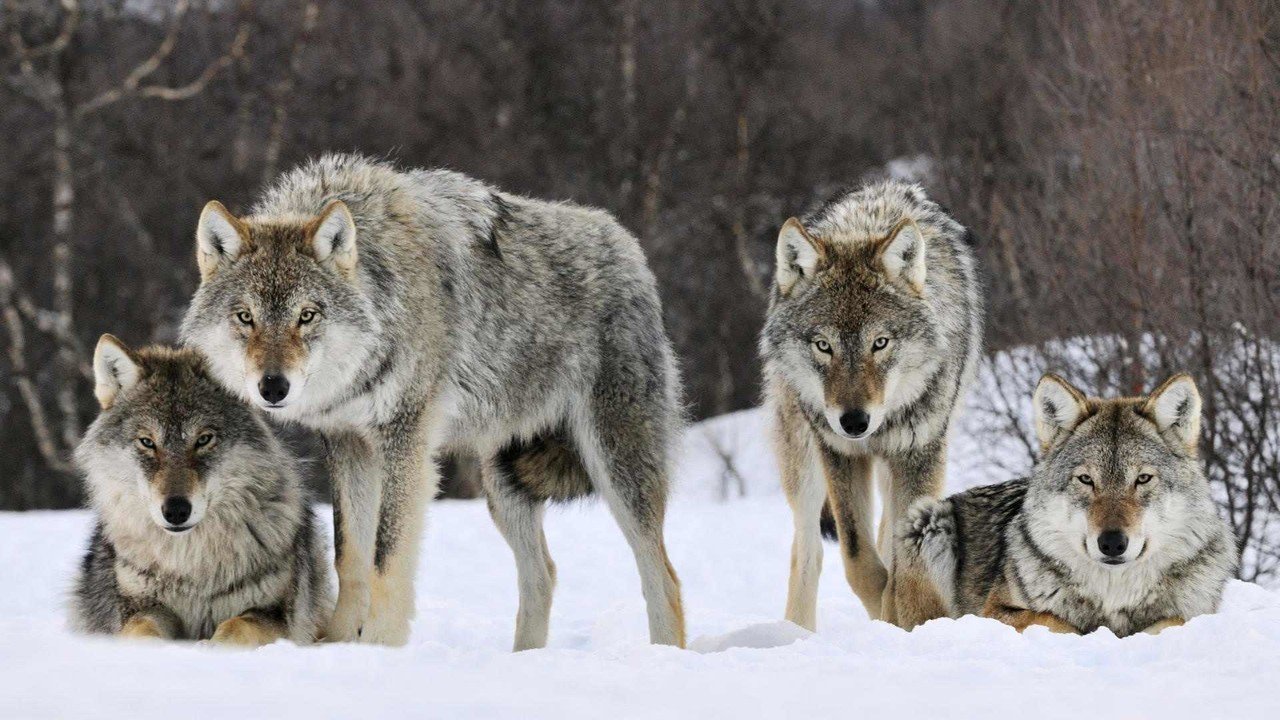
Wolves are among the most intelligent and socially organized predators in the natural world because they survive not through individual strength alone but through cooperation, communication, strategic hunting, and complex family structures, and unlike solitary predators that depend mainly on stealth or physical power, wolves function as highly coordinated social units where every member contributes to survival, making wolf packs one of the most advanced examples of teamwork and social intelligence in the animal kingdom.
🌿 Biological Structure and Physical Adaptations of Wolves
Wolves belong to the species Canis lupus and are the largest members of the dog family, possessing strong muscular bodies, long legs for endurance running, highly sensitive noses capable of detecting scents over long distances, and powerful jaws designed for gripping and tearing prey, while their thick fur provides insulation against freezing temperatures and harsh weather conditions, allowing wolves to survive in forests, mountains, tundras, and snowy ecosystems across multiple continents.
🧠 Pack Psychology and Social Intelligence
One of the most fascinating aspects of wolves is their highly developed social structure because wolf packs function more like family systems than random groups, and a typical pack consists of parents and their offspring working together to protect territory, raise young, and hunt efficiently, while wolves constantly communicate through body language, vocal sounds, facial expressions, and scent marking, creating strong emotional and behavioral coordination within the group.
🐺 Leadership and Pack Hierarchy
Wolf packs operate through organized leadership systems where experienced adult wolves guide hunting decisions, territory defense, and pack movement, and contrary to older misconceptions about constant violent dominance battles, modern research shows that wolf leadership is often based more on parental roles, experience, and cooperation rather than aggressive control, making wolf hierarchy more stable and family-oriented than previously believed.
🌕 How Wolves Communicate Through Howling
Wolves are famous for their howling behavior, and scientifically howling serves multiple survival functions including locating pack members, warning rival wolves about territory boundaries, coordinating movement, and strengthening social bonds within the group, while each wolf’s howl contains unique vocal characteristics that allow pack members to recognize individuals over long distances, making howling both a communication system and a social connection tool.
🦌 Hunting Strategy and Cooperative Intelligence
Wolves are highly strategic hunters because they rely on teamwork, endurance, and observation rather than simple attack behavior, and during hunts wolves analyze prey weakness, environmental conditions, escape routes, and group positioning before attacking, while pack coordination allows them to target large animals such as deer, elk, or bison that would be impossible for a single wolf to defeat alone, demonstrating advanced cooperative problem-solving and tactical behavior.
🌍 Ecological Importance of Wolves
Wolves are apex predators, meaning they help regulate ecosystems by controlling herbivore populations and preventing overgrazing, and one of the most famous ecological examples occurred in Yellowstone National Park where the reintroduction of wolves restored balance to entire ecosystems by reducing excessive elk populations, allowing forests, rivers, birds, and other animal species to recover, proving that wolves influence not just prey populations but entire environmental systems.
⚠️ Human Conflict and Conservation Challenges
Throughout history wolves have often faced persecution due to fear, livestock conflicts, and cultural myths portraying them as dangerous monsters, leading to habitat destruction and population decline in many regions, while modern conservation efforts focus on balancing ecological protection with human coexistence strategies, because scientists increasingly recognize wolves as essential components of healthy ecosystems rather than threats to nature.
🧬 Evolutionary Relationship Between Wolves and Dogs
Domestic dogs evolved from ancient wolf ancestors thousands of years ago through gradual domestication processes where wolves that tolerated human presence gained survival advantages, and despite major physical and behavioral differences today, dogs and wolves still share many social behaviors, communication systems, and genetic traits, making wolves key to understanding the evolution of canine intelligence and human-animal relationships.
🧠 Psychological and Cultural Symbolism of Wolves
Wolves symbolize strength, freedom, loyalty, survival, and intelligence in many cultures because of their social bonds and endurance-based survival strategies, while in mythology and storytelling wolves are often portrayed as mysterious and powerful creatures representing wilderness and instinct, creating strong emotional fascination in human psychology and cultural imagination.
🐺 Conclusion
Wolves are far more than dangerous predators because they represent one of nature’s most advanced systems of social intelligence, teamwork, and ecological balance, combining communication, strategy, emotional bonding, and environmental influence into highly organized family-based societies that shape entire ecosystems, making wolves among the most important and psychologically fascinating animals on Earth.
❓ FAQ
1. Why do wolves live in packs?
Because teamwork improves hunting success and survival.
2. How do wolves communicate?
Through howling, body language, scent marking, and vocal sounds.
3. Are wolves important for ecosystems?
Yes, they regulate prey populations and maintain ecological balance.
4. Did dogs evolve from wolves?
Yes, domestic dogs evolved from ancient wolf ancestors.
5. What do wolves symbolize?
They symbolize loyalty, strength, intelligence, and freedom.









Post Comment