Eagles: Complete Deep Guide – Vision Science, Aerial Hunting, Flight Physics & Survival Dominance
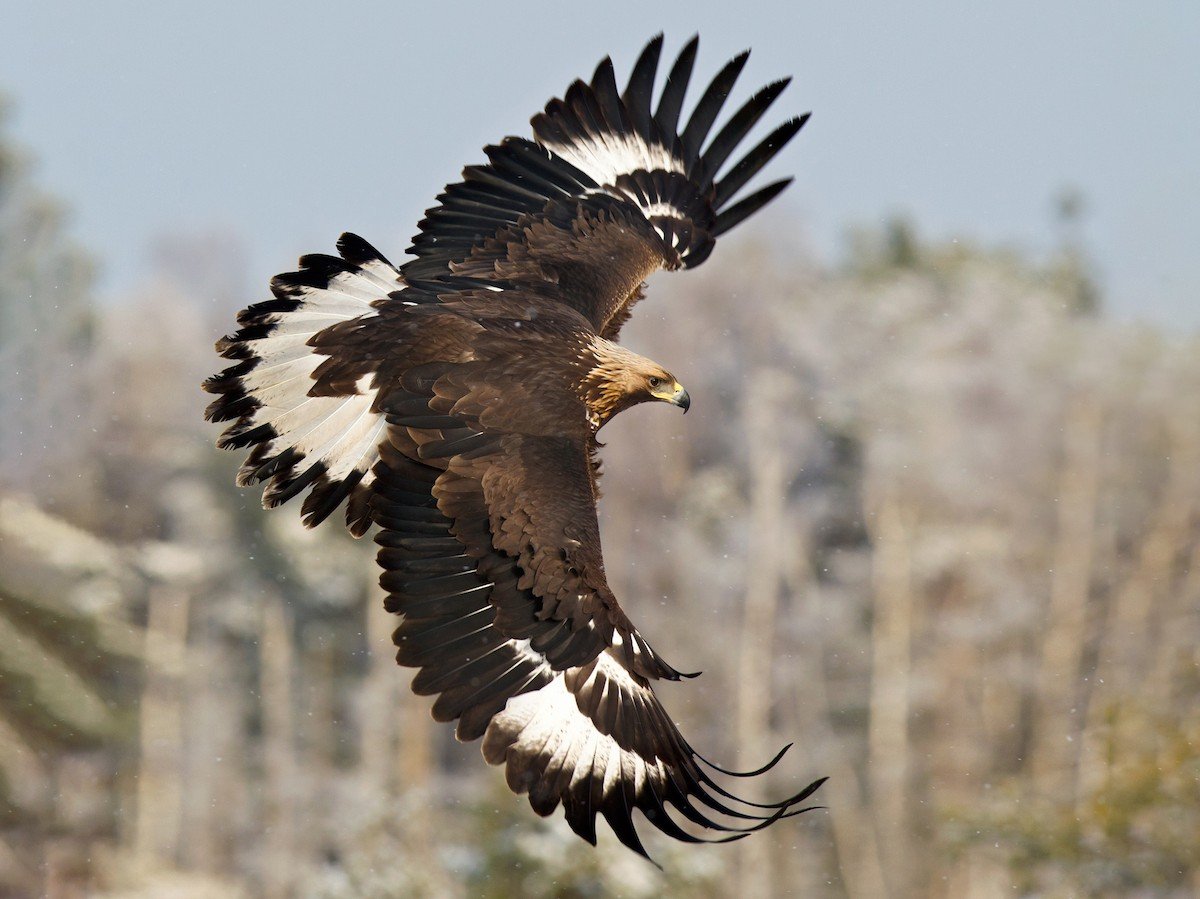
Eagles are among the most powerful and scientifically advanced birds in the natural world because they combine extraordinary vision, aerodynamic flight systems, lethal hunting precision, and extreme survival adaptations into a single apex predator, and unlike smaller birds that depend mainly on speed or flock behavior for protection, eagles dominate ecosystems through strength, intelligence, altitude control, and long-distance observation, making them symbols of power, freedom, leadership, and dominance across human civilizations and natural environments.
🌿 Biological Structure and Anatomy of Eagles
Eagles belong to the family Accipitridae and possess highly specialized body structures designed for aerial hunting and survival, including massive wingspans for efficient soaring, sharp curved beaks for tearing flesh, muscular legs, and extremely powerful talons capable of gripping prey with crushing force, while their lightweight hollow bones reduce body mass without sacrificing strength, allowing eagles to maintain long periods of flight with minimal energy expenditure.
👁️ Vision Science: Why Eagle Eyes Are So Powerful
One of the most extraordinary abilities of eagles is their vision, which is estimated to be several times stronger than human eyesight, and scientifically this enhanced vision comes from extremely dense photoreceptor cells in the retina, larger eyes relative to body size, and specialized focusing systems that allow eagles to detect tiny movements from kilometers away, while their eyes can perceive ultraviolet light and maintain sharp focus during high-speed flight, making eagle vision one of the most advanced optical systems among vertebrates.
🪂 Flight Physics and Aerodynamic Efficiency
Eagles are masters of aerodynamic flight because their broad wings and feather structures are designed to maximize lift while minimizing energy loss, and rather than constantly flapping their wings they often soar using thermal air currents that allow them to remain airborne for long periods with minimal effort, while precise feather adjustments help maintain balance, speed control, and maneuverability during dives and hunting attacks, demonstrating highly advanced natural flight engineering.
🦅 Hunting Strategy and Predator Intelligence
Eagles are apex aerial predators that rely on patience, observation, and precision rather than random attacks, and they often spend long periods scanning landscapes from high altitudes before identifying prey such as fish, rabbits, rodents, or birds, while some species like the bald eagle specialize in fishing and others like the golden eagle hunt mammals in mountainous regions, and once prey is targeted the eagle performs rapid controlled dives with extraordinary accuracy, using talons to capture prey instantly.
🌍 Ecological Importance of Eagles
Eagles play important ecological roles because they regulate prey populations and help maintain balance in food chains, while also acting as indicators of environmental health since pollution and ecosystem disruption directly affect top predators, and because eagles occupy high positions in ecological hierarchies, their survival often reflects the overall stability of forests, rivers, mountains, and aquatic ecosystems.
🧬 Evolutionary Success and Adaptation
Eagles evolved highly efficient survival systems over millions of years, developing sharp senses, strong skeletal structures, and adaptable hunting strategies that allow them to survive across deserts, forests, coastlines, tundras, and mountain regions, while their long lifespan and territorial intelligence help maintain stable predator populations in diverse ecosystems around the world.
⚠️ Environmental Threats and Conservation
Many eagle species faced severe population decline during the 20th century due to habitat destruction, hunting, pollution, and chemicals such as DDT, which weakened eggshells and reduced reproduction rates, and although conservation programs helped recover several species including the bald eagle, ongoing threats from deforestation, climate change, and human expansion continue to impact eagle habitats globally.
🧠 Psychological and Cultural Symbolism of Eagles
Throughout history eagles have symbolized power, courage, freedom, leadership, and divine authority because of their dominance in the sky and sharp observational abilities, while many empires, nations, and military systems adopted eagle imagery as representations of strength and vision, making eagles among the most culturally respected animals in human civilization.
🤖 Scientific Inspiration from Eagle Flight and Vision
Scientists study eagle flight mechanics and vision systems for applications in aviation, robotics, surveillance technology, and optical engineering because eagle feather structures, soaring techniques, and visual tracking abilities provide models for improving drones, aircraft stability, and advanced camera systems, showing how natural evolution continues to inspire technological innovation.
🦅 Conclusion
Eagles are far more than large birds because they represent one of nature’s most advanced combinations of vision, physics, intelligence, and predatory adaptation, combining aerial mastery, environmental awareness, and ecological influence into apex predators that dominate skies across the world while inspiring human cultures, engineering, and scientific research, making eagles among the most respected and biologically sophisticated animals on Earth.
❓ FAQ
1. Why do eagles have such powerful vision?
Because of extremely dense retinal cells and advanced focusing systems.
2. How do eagles fly for long periods?
They use thermal air currents and aerodynamic wing structures.
3. What do eagles hunt?
Fish, mammals, birds, and reptiles depending on species.
4. Why are eagles important to ecosystems?
They regulate prey populations and indicate environmental health.
5. What do eagles symbolize?
They symbolize power, freedom, leadership, and dominance.











Post Comment