Honey Bees: Complete Deep Guide – Intelligence, Communication, Ecology & Survival Science
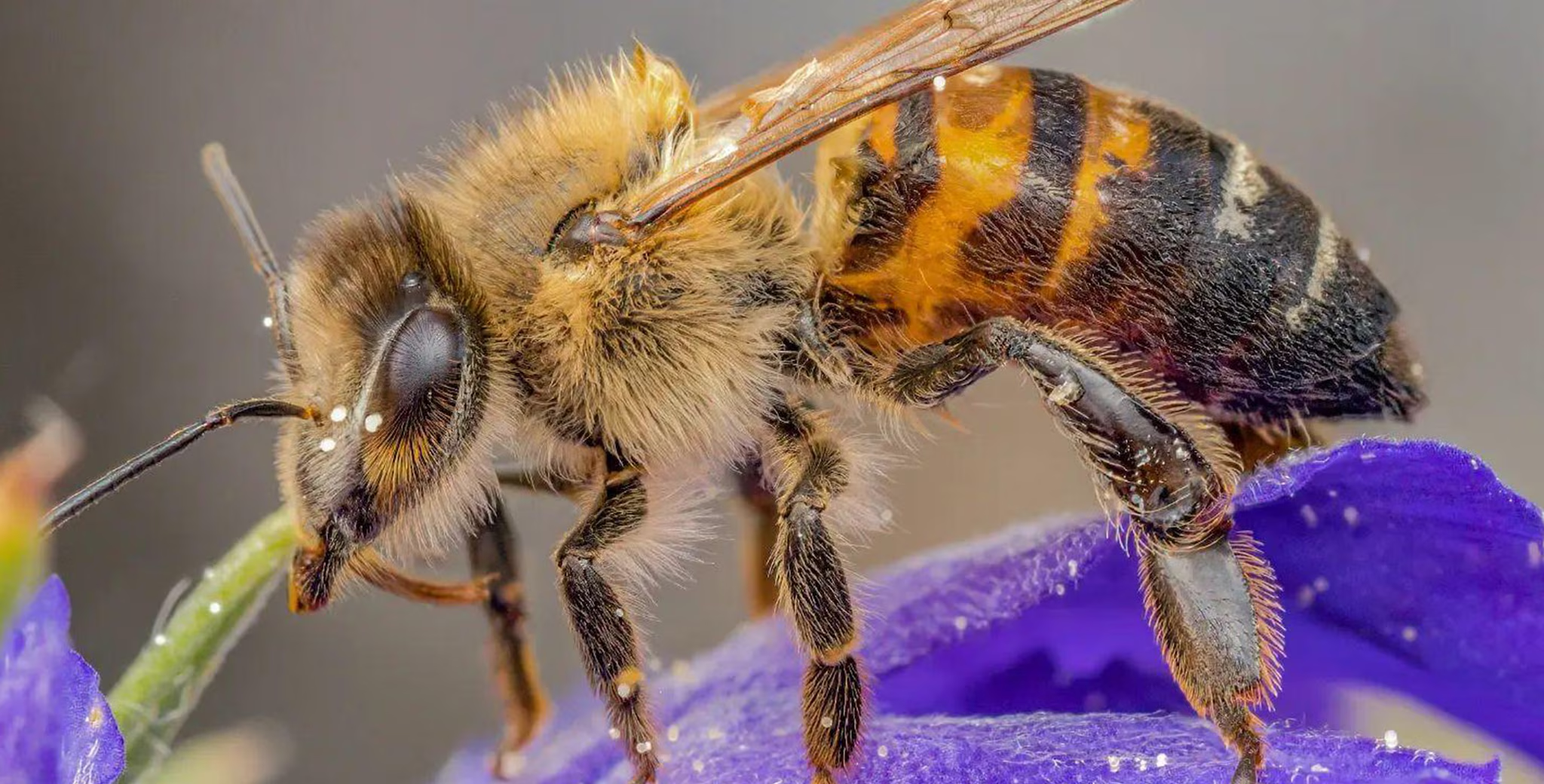
Honey bees are among the most important and scientifically fascinating insects on Earth because they are not only producers of honey but also highly organized social organisms that play a critical role in pollination, food production, ecosystem stability, and biodiversity maintenance, and unlike many insects that survive individually, honey bees function as a collective superorganism where thousands of individuals cooperate with extreme precision through communication systems, role specialization, temperature control, and advanced navigation abilities, making bee colonies one of the most efficient natural societies in the biological world.
🌿 Biological Structure and Anatomy of Honey Bees
Honey bees belong to the species Apis mellifera and possess highly specialized body structures designed for pollination, communication, and colony survival, and their bodies are divided into three main sections including the head, thorax, and abdomen, while tiny hairs covering the body help collect pollen during flower visits, and bees also have compound eyes capable of detecting ultraviolet patterns invisible to humans, allowing them to locate flowers more efficiently, while specialized mouthparts help them extract nectar and convert it into honey inside the hive.
🧠 Intelligence and Navigation Abilities of Bees
Honey bees display surprisingly advanced intelligence for insects because they can recognize patterns, learn routes, remember food locations, and communicate directions to other bees through movement-based language systems, and one of the most famous examples is the “waggle dance,” where worker bees perform specific movements inside the hive to communicate the distance and direction of food sources relative to the sun, and this behavior demonstrates complex spatial awareness and social coordination rarely seen in insects.
🍯 How Bees Make Honey
Honey production begins when worker bees collect nectar from flowers using their long tongues and store it in a special honey stomach separate from their digestive system, and once back in the hive the nectar is transferred between bees where enzymes gradually break down complex sugars into simpler forms, while hive workers fan their wings to evaporate excess water from the nectar until it thickens into honey, after which it is sealed inside wax honeycomb cells for long-term storage and colony nutrition.
🏠 Structure and Organization of Bee Colonies
Bee colonies operate through an advanced social hierarchy consisting of one queen bee, thousands of female worker bees, and a smaller number of male drones, and each group performs specialized functions essential for colony survival, where the queen’s primary role is reproduction, workers handle foraging, hive maintenance, defense, and caring for larvae, while drones exist mainly for mating purposes, and this division of labor creates one of the most efficient cooperative systems found in nature.
🌍 Ecological Importance of Honey Bees
Honey bees are critically important to global ecosystems because they pollinate a massive percentage of flowering plants and agricultural crops, including fruits, vegetables, nuts, and seeds, and without bee pollination many ecosystems would collapse while food production would decline dramatically, making bees essential not only for biodiversity but also for global food security and agricultural economies.
⚠️ Why Bee Populations Are Declining
Bee populations around the world are declining due to multiple environmental pressures including pesticide exposure, habitat destruction, climate change, pollution, and diseases caused by parasites such as Varroa mites, and these threats weaken colonies, reduce reproduction rates, and disrupt pollination systems, creating serious concerns for agriculture and ecosystem stability, while scientists and conservation groups are increasingly working on strategies to protect bee populations through sustainable farming and habitat restoration.
🧪 Scientific and Medical Importance of Bee Products
Bee products such as honey, beeswax, royal jelly, propolis, and bee venom have important scientific and commercial applications, and honey contains antimicrobial properties that help prevent bacterial growth, while propolis is studied for potential immune-supporting effects, and bee venom research is being explored for pain management and medical therapies, making bees valuable not only ecologically but also economically and medically.
🐝 Psychological and Symbolic Meaning of Bees
Throughout history bees have symbolized teamwork, discipline, productivity, intelligence, and harmony because of their organized social behavior and tireless work ethic, and in many cultures bees represent cooperation and balance between individual effort and community survival, making them powerful symbols in philosophy, leadership, and environmental awareness.
🌿 Conclusion
Honey bees are far more than small flying insects because they represent one of the most advanced examples of cooperation, communication, and ecological importance in the natural world, combining intelligence, biological specialization, and environmental contribution into a single species that directly supports both human civilization and global ecosystems, and their survival is deeply connected with the future stability of agriculture, biodiversity, and food production on Earth.













Post Comment