Butterflies: Complete Deep Guide – Metamorphosis, Wing Science, Migration & Survival Intelligence
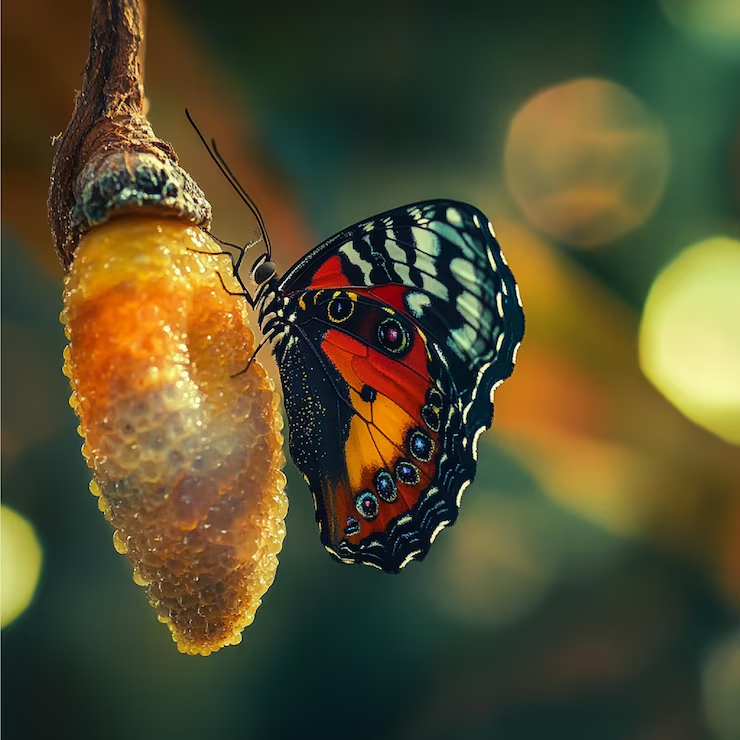
Butterflies are among the most scientifically extraordinary and visually captivating insects on Earth because they undergo one of the most dramatic biological transformations in the animal kingdom, changing completely from crawling caterpillars into flying pollinators through a process called metamorphosis, and unlike many insects that simply grow larger over time, butterflies rebuild much of their internal and external structure during development, making them powerful symbols of transformation, adaptation, beauty, and survival in both science and human culture.
🌿 Biological Structure and Anatomy of Butterflies
Butterflies belong to the order Lepidoptera, and their bodies are divided into three main sections including the head, thorax, and abdomen, while their wings are covered in thousands of microscopic scales that create the colors and patterns seen on different species, and these scales interact with light through both pigments and structural coloration, meaning some butterfly colors are created not by chemical pigments but by microscopic structures that reflect and scatter light in highly precise ways, making butterfly wings one of the most advanced optical systems found in nature.
🐛 The Complete Metamorphosis Process
One of the most remarkable biological processes in nature is butterfly metamorphosis, where the insect passes through four major life stages including egg, caterpillar, chrysalis, and adult butterfly, and after hatching from the egg the caterpillar enters a rapid feeding stage where it consumes large amounts of plant material to store energy, and once fully grown it forms a chrysalis where much of its body is broken down and reorganized into entirely new structures including wings, antennae, reproductive organs, and compound eyes, creating a completely transformed adult insect capable of flight and reproduction.
🌈 Why Butterfly Wings Have Such Brilliant Colors
Butterfly wing colors are produced through two main systems including pigmentation and structural coloration, where pigments create basic colors like yellow and orange while microscopic nanostructures on the scales manipulate light to produce iridescent blue, metallic, or shimmering effects, and these color systems serve multiple survival purposes including camouflage, attracting mates, warning predators about toxicity, and confusing attackers through eye-like patterns or sudden flashes of color during flight.
🧠 Intelligence and Survival Behavior of Butterflies
Although butterflies have relatively small nervous systems, they display highly effective survival behaviors including migration, host plant recognition, predator avoidance, and environmental adaptation, and female butterflies can identify specific plants suitable for laying eggs using chemical sensors on their feet, while some species migrate thousands of kilometers across continents using sunlight, Earth’s magnetic field, and environmental cues for navigation, demonstrating surprisingly advanced orientation abilities for insects.
🌍 Monarch Butterfly Migration: One of Nature’s Greatest Journeys
The migration of monarch butterflies is one of the most extraordinary phenomena in the insect world because millions of butterflies travel thousands of kilometers between North America and overwintering forests in Mexico, and what makes this migration especially remarkable is that multiple generations complete the journey, meaning butterflies somehow inherit navigation instincts genetically despite never having made the trip before, making monarch migration one of the greatest examples of inherited biological navigation systems in nature.
🌸 Ecological Importance of Butterflies
Butterflies are ecologically important because they act as pollinators for many flowering plants while also serving as indicators of environmental health, and healthy butterfly populations often reflect balanced ecosystems with sufficient plant diversity and low pollution levels, while caterpillars also contribute to food chains by serving as prey for birds, reptiles, and other insects, making butterflies essential components of biodiversity and ecosystem stability.
⚠️ Threats Facing Butterfly Populations
Butterfly populations worldwide are declining due to habitat destruction, pesticide use, climate change, pollution, and loss of native plants required for caterpillar development, and because many butterfly species depend on highly specific host plants, environmental disruption can quickly reduce reproduction and survival rates, leading scientists and conservationists to focus heavily on habitat restoration and pollinator-friendly ecosystems to protect butterfly biodiversity.
🧪 Scientific and Technological Inspiration from Butterfly Wings
Butterfly wings have inspired research in optics, materials science, and engineering because their microscopic structures create highly efficient light reflection systems that scientists study for applications in solar technology, anti-counterfeit security printing, color engineering, and advanced materials, showing how butterfly biology continues to influence modern science and technological innovation.
🦋 Psychological and Symbolic Meaning of Butterflies
Throughout history butterflies have symbolized transformation, rebirth, hope, freedom, and personal growth because of their dramatic metamorphosis from caterpillar to flying insect, and in psychology and art they often represent emotional healing, change, and spiritual renewal, making butterflies powerful cultural symbols connected with beauty and transformation across civilizations.
🌿 Conclusion
Butterflies are far more than delicate colorful insects because they represent one of nature’s most advanced systems of transformation, adaptation, and ecological integration, combining biological engineering, survival intelligence, migration abilities, and visual beauty into a single life form that influences ecosystems, science, technology, and human imagination, making butterflies among the most extraordinary organisms on Earth.





Post Comment