Spiders: Complete Deep Guide – Web Engineering, Venom Science, Hunting Intelligence & Survival Biology
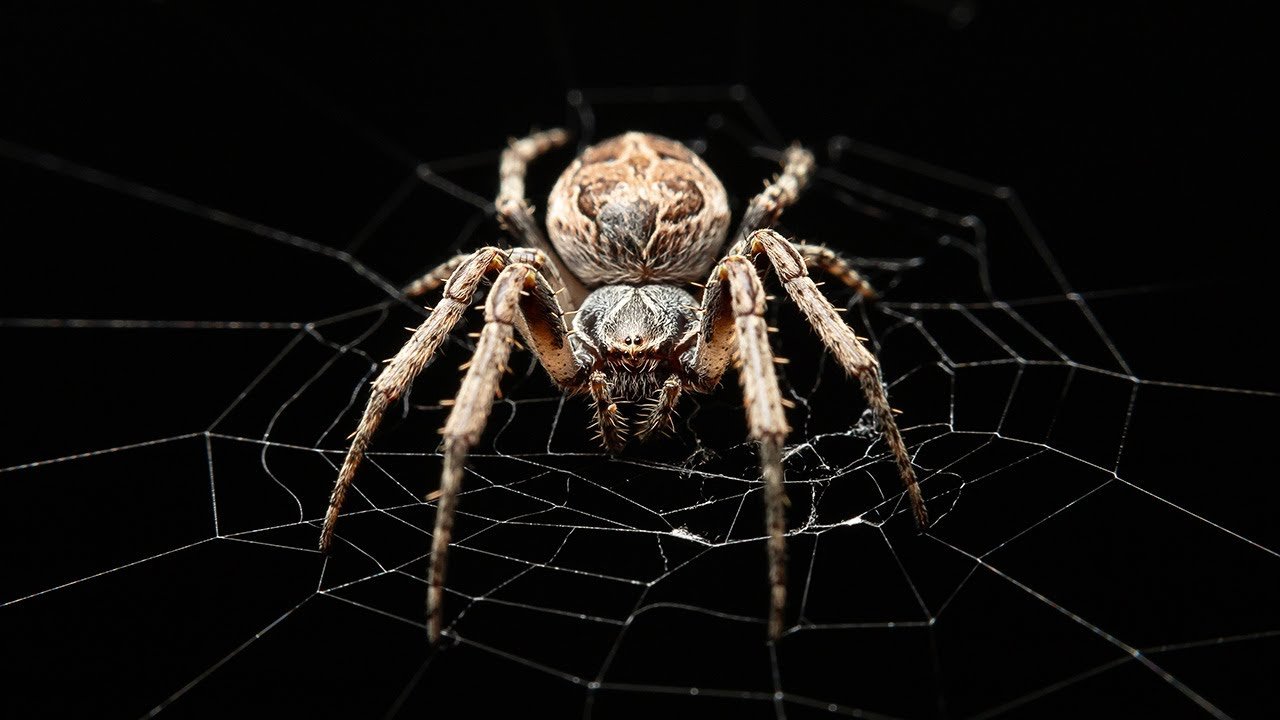
Spiders are among the most misunderstood yet scientifically extraordinary creatures on Earth because they combine biological engineering, chemical weapon systems, advanced hunting strategies, and highly specialized survival adaptations into a single group of organisms, and unlike insects, spiders belong to the class Arachnida, meaning they evolved separately with unique body structures and behaviors that have allowed them to survive for hundreds of millions of years across forests, deserts, caves, mountains, and even urban environments, making spiders one of the most adaptable predators in the natural world.
🌿 Biological Structure and Anatomy of Spiders
Spiders have a highly specialized body divided into two main sections called the cephalothorax and abdomen, and unlike insects they possess eight legs instead of six while lacking antennae and wings, and one of their most advanced biological features is the spinneret system located at the rear of the abdomen, which produces silk proteins capable of creating webs stronger than steel relative to weight, while their multiple eyes provide different forms of motion detection and environmental awareness depending on species and hunting style.
🕸️ Spider Silk: One of Nature’s Greatest Engineering Materials
Spider silk is considered one of the most remarkable biological materials in nature because it combines extreme strength, flexibility, and lightweight structure in a way that surpasses many synthetic fibers created by humans, and spiders can produce multiple types of silk for different purposes including web construction, egg protection, prey wrapping, climbing, and escape lines, while the silk itself is made from liquid proteins that solidify instantly when exposed to air, creating durable fibers with highly advanced molecular organization.
🧠 Hunting Intelligence and Strategic Behavior
Spiders are highly intelligent predators relative to their size because they use complex hunting methods depending on species, and while web-building spiders rely on vibration detection to trap prey efficiently, jumping spiders actively stalk targets using depth perception and rapid attack calculations, while trapdoor spiders build hidden underground ambush systems with camouflaged entrances, showing that spider hunting behavior involves planning, environmental adaptation, and highly specialized sensory systems.
🕷️ Web Engineering and Mathematical Precision
Spider webs are among the most precise structures built by animals because they are designed using optimized geometric patterns that maximize strength while minimizing silk usage, and orb-weaving spiders create circular webs with radial and spiral threads engineered to absorb the impact energy of flying insects without breaking, while sticky capture threads increase prey retention efficiency, making spider webs natural examples of advanced structural engineering and material efficiency.
☠️ Venom Science and Biological Weapons
Most spiders possess venom used primarily for immobilizing prey and beginning external digestion, and spider venom contains highly specialized proteins and neurotoxins that target the nervous systems of insects and small animals, while in many species the venom is harmless or only mildly irritating to humans, and scientists study spider venom extensively because certain compounds may have potential applications in medicine, pain management, and neurological research, making spiders important not only ecologically but also scientifically.
🌍 Ecological Importance of Spiders
Spiders play a critical ecological role because they control insect populations naturally and prevent ecosystem imbalance caused by excessive pest growth, and a single spider may consume hundreds or thousands of insects annually, reducing agricultural pests and supporting environmental stability, while spiders themselves also serve as food sources for birds, reptiles, amphibians, and other predators, making them essential parts of global food webs and biodiversity systems.
🧬 Evolution and Survival Success of Spiders
Spiders have survived for more than 300 million years because of their incredible adaptability and evolutionary efficiency, and over time they developed specialized survival strategies including camouflage, mimicry, venom diversity, silk engineering, and behavioral flexibility, allowing them to colonize nearly every environment on Earth except extreme polar regions, making spiders one of the most evolutionarily successful predator groups in natural history.
🧠 Psychological Fear of Spiders (Arachnophobia)
Humans often fear spiders due to a condition called arachnophobia, which may partially originate from evolutionary survival instincts because early humans benefited from quickly identifying potentially dangerous animals, while cultural storytelling and visual sensitivity to rapid spider movement also contribute to fear responses, although scientifically the majority of spider species are harmless to humans and actively avoid human interaction whenever possible.
🧪 Scientific and Technological Inspiration from Spiders
Spider silk and spider sensory systems inspire research in engineering, robotics, medicine, and materials science because scientists hope to recreate spider silk for use in surgical threads, lightweight armor, biodegradable materials, and advanced textiles, while spider movement and vibration detection systems are studied for applications in robotics and sensor technology, proving that spider biology continues to influence modern scientific innovation.
🕷️ Conclusion
Spiders are far more than simple crawling predators because they represent one of nature’s most advanced combinations of engineering, chemistry, intelligence, and evolutionary adaptation, combining silk production, venom systems, hunting strategies, and ecological balance into highly specialized organisms that directly support environmental stability while inspiring modern science and technology, making spiders among the most important and scientifically valuable predators on Earth.
❓ FAQ
1. Are all spiders venomous?
Most spiders have venom, but the majority are harmless to humans.
2. Why is spider silk so important?
Because it is extremely strong, flexible, and scientifically valuable.
3. How do spiders hunt?
Some use webs while others actively stalk or ambush prey.
4. Why are spiders important to ecosystems?
They control insect populations and support biodiversity.
5. What is arachnophobia?
An intense fear of spiders often linked with survival instincts.






Post Comment